Blackheads, Sebaceous Filaments, or Dead Skin Buildup?

Why Does the Skin Around My Nose Feel Rough and Uneven?

Even when you cleanse your face thoroughly, you may notice that the skin around your nose still feels rough, bumpy, or uneven.

When you look closely in the mirror, you might see tiny dots and wonder,

“Do I really have that many blackheads?”

But not every visible dot or rough area around the nose is caused by blackheads.

The nose naturally tends to produce more oil than many other areas of the face, and the pores are often more noticeable. Because of this, blackheads, sebaceous filaments, dead skin buildup, and dryness can sometimes appear at the same time.

And this rough texture isn’t always limited to the nose.

Depending on your skin, you may also notice uneven texture around the sides of the nose, on the inner cheeks, around the cheekbones, or even across larger areas of the face.

So rather than assuming that every visible dot is a blackhead, it helps to first understand what you may actually be seeing on your skin.


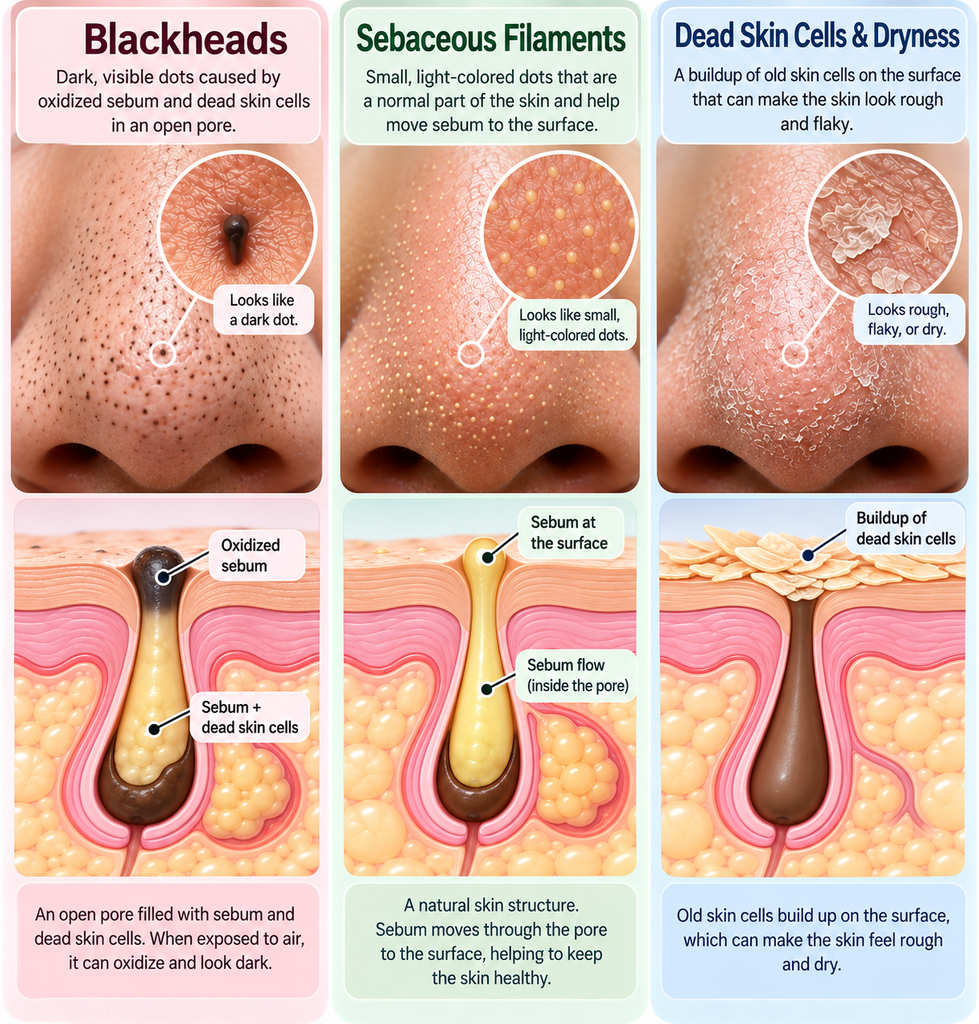
1. Blackheads

Blackheads are a type of open comedone that forms when sebum and dead skin cells build up inside a pore.

Because the pore remains open, the material at the surface is exposed to air and oxidizes, which can make it appear dark brown or black.

What can blackheads look like?

  • Dark or black dots that are relatively easy to see
  • Individual pores that look more noticeably clogged than the surrounding pores
  • Small bumps or uneven texture that you may be able to feel

If you notice blackheads, repeatedly squeezing them with your fingers or nails is not recommended.

Too much pressure can irritate the skin and may lead to redness or skin damage.


2. Sebaceous Filaments

One of the things most commonly confused with blackheads is sebaceous filaments.

Unlike blackheads, sebaceous filaments are not acne lesions. They are normal structures within the follicle associated with the natural movement of sebum toward the skin’s surface.

They contain sebum and skin cells and are often more noticeable in areas where oil production is higher, especially on the tip and sides of the nose.

What can sebaceous filaments look like?

  • Tiny gray, ivory, or pale yellow dots
  • Small dots that appear relatively uniform across many pores
  • More noticeable dots around the tip and sides of the nose

There is an important difference between sebaceous filaments and blackheads.

Sebaceous filaments do not need to be individually removed like blackheads.

Even after they are cleared or made less visible, the skin continues to produce sebum, so they may gradually become noticeable again.

Instead of repeatedly squeezing the pores in an attempt to completely remove them, it is more helpful to focus on keeping excess sebum and dead skin buildup under control while maintaining the overall condition of the skin.


3. Dead Skin Buildup & Dryness

Sometimes there may not be many dark dots at all, yet the skin feels flaky, rough, or almost sandpaper-like when you touch it.

In these cases, the texture may not be caused primarily by oil inside the pores. Dead skin buildup, flaking skin cells, and lack of moisture at the skin’s surface may also contribute to the rough feeling.

What can this look or feel like?

  • Rough texture is more noticeable than dark dots
  • Makeup may look patchy or cling unevenly around the nose or cheeks
  • White or flaky skin may be visible on the surface
  • The skin may feel tight after cleansing but become oily again later

If this type of texture is mistaken for blackheads, repeatedly squeezing the skin or using aggressive exfoliation may actually leave the skin feeling drier and more sensitive.


How Can You Tell the Difference?

Dark or black dots are clearly visible in individual pores
Possibly blackheads

Tiny gray, ivory, or pale yellow dots appear evenly across many pores
Possibly sebaceous filaments

The skin feels flaky or rough, with texture being more noticeable than dark dots
Dead skin buildup or dryness may be contributing

In real skin, however, it is very common to see more than one of these at the same time.

For example:

Sebaceous filaments + dead skin buildup + a few blackheads

may all be present in the same area.

That is why it is helpful to look at the overall condition of the skin rather than judging by color or appearance alone.

Does Everything You See in a Pore Need to Be Removed?

When you see something inside a pore, it can be tempting to squeeze it out and make the pore look completely clean.

But not everything you can see needs to be removed.

Blackheads are open comedones formed by a buildup of sebum and dead skin cells. Sebaceous filaments, on the other hand, are associated with the skin’s normal sebum flow and can naturally remain visible.

And rough texture does not always mean there is oil trapped inside the pores.

If dryness or lifted dead skin cells are contributing to the texture, repeated squeezing or aggressive exfoliation can make the skin feel even rougher and more sensitive.

When it comes to pore care, the goal should not simply be “How much can I remove?”

The more important question is “What does my skin actually need right now?”


Why Doesn’t One Treatment Last Forever?

Skin does not stay exactly the same after it has been cleansed or professionally cared for.

Your skin is constantly changing.

Sebum continues to be produced. New skin cells are continually formed, while older cells naturally shed from the surface.

Skin condition can also change with the seasons, dryness, sun exposure, lifestyle, and other environmental factors.

So even if visible sebum and dead skin buildup are thoroughly cleared today, that does not mean your skin will stop producing sebum.

Over time, pores can naturally fill with sebum again, and new skin cells will continue to form.

Sebaceous filaments, in particular, are part of the normal process associated with sebum movement through the follicle, so it is natural for them to become visible again after they have been cleared or made less noticeable.

This does not mean that your previous skincare treatment did not work.

It simply reflects the fact that your skin continues its natural cycle of producing sebum and renewing skin cells.


Pore Care Is More About Maintenance Than “Removing Everything”

Skincare is not about removing everything once and expecting the skin to stay that way permanently.

It is better thought of as clearing what is currently noticeable and maintaining healthy-looking skin as it continues to change over time.

Because sebum and skin cells are continuously produced, aggressively removing them once will not make them disappear permanently.

Instead of squeezing or stripping the skin every time pores become noticeable, it is better to care for what the skin needs at that moment while maintaining a balanced skin condition.

Some concerns can be managed as part of a regular skincare routine. When blackheads are difficult to manage on your own, or when excess sebum and dead skin buildup are making the skin feel particularly rough, professional skincare may also help address the areas that need more focused attention.

Ultimately, what matters is not how much you can remove at once, but how well you can maintain the skin without causing unnecessary irritation.


Remember

Blackheads ≠ Sebaceous Filaments ≠ Dead Skin Buildup

They are different, but more than one can appear on the same person’s skin at the same time.

If your nose feels rough and you notice tiny dots, there is no need to assume that everything you see is a blackhead.

Before squeezing or aggressively exfoliating, take a closer look at what you are actually seeing, whether the skin may be dry, and whether sebum and dead skin buildup may be present together.

Your skin will continue to produce sebum and go through its natural renewal cycle.

The goal of good skincare is not to remove everything all at once, but to care for what the skin needs and maintain a healthy, balanced condition over time.

Skin Care Jayna

If you experience persistent redness, pain, inflammation, severe itching, or signs of a possible skin condition, avoid repeated extraction or exfoliation and consult a dermatologist or qualified medical professional.
코 블랙헤드일까? 피지 필라멘트일까? 묵은 각질일까?

코와 모공이 왜 매끈하지 않을까?

세안은 꼼꼼하게 하는데도 유독 코가 까슬까슬하고 오돌토돌하게 느껴질 때가 있습니다.

거울을 가까이 들여다보면 작은 점들이 보여서
“블랙헤드가 이렇게 많은 건가?”라고 생각하기도 하지요.

하지만 코에 보이는 작은 점과 거친 촉감이 모두 블랙헤드 때문인 것은 아닙니다.

코는 얼굴의 다른 부위보다 피지 분비가 활발하고 모공이 눈에 잘 띄는 부위입니다. 그래서 블랙헤드, 피지 필라멘트(Sebaceous Filaments), 묵은 각질과 건조함이 함께 나타나기도 합니다.

또 이런 거친 촉감은 꼭 코에만 나타나는 것은 아닙니다. 사람에 따라 콧방울 옆, 코 옆 볼 안쪽, 광대 주변, 때로는 얼굴 전체적으로 피부가 거칠고 오돌토돌하게 느껴질 수도 있습니다.

따라서 무조건 “블랙헤드가 많다”고 생각하기보다는 지금 피부에서 무엇이 보이고 있는지 먼저 살펴보는 것이 중요합니다.


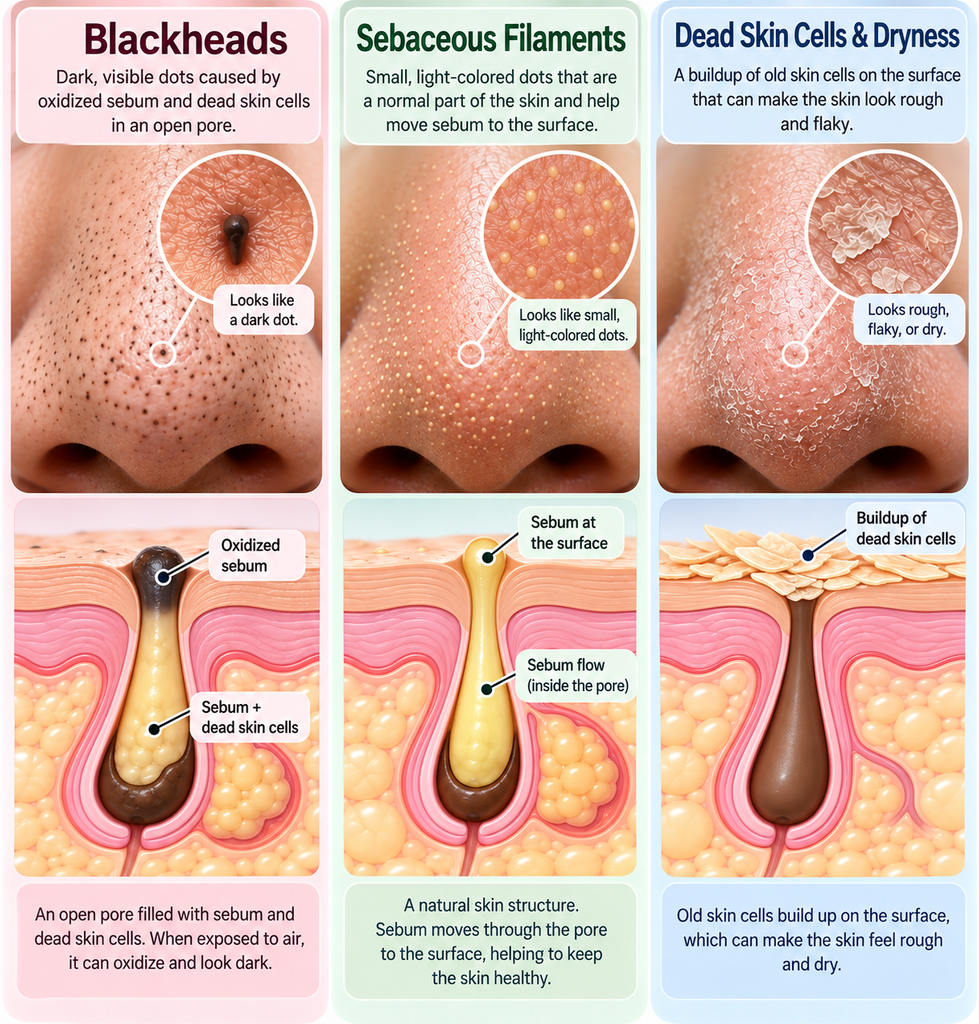
1. 블랙헤드 (Blackheads)

블랙헤드는 모공 안에 피지와 각질이 쌓여 형성되는 개방면포(Open Comedone) 입니다.

모공 입구가 열려 있어 피지와 각질이 공기에 노출되면 표면이 산화되면서 검거나 짙은 점처럼 보일 수 있습니다.

이런 모습으로 보일 수 있어요

  • 검거나 짙은 점이 비교적 뚜렷하게 보입니다.
  • 코 전체에 똑같이 퍼져 있기보다 특정 모공에 콕콕 박혀 보일 수 있습니다.
  • 일부는 만졌을 때 오돌토돌하게 느껴질 수 있습니다.

블랙헤드가 보인다고 해서 손이나 손톱으로 반복해서 짜는 것은 피하는 것이 좋습니다.

무리한 압출은 피부에 자극을 주고 붉어짐이나 피부 손상을 남길 수 있기 때문입니다.


2. 피지 필라멘트 (Sebaceous Filaments)

블랙헤드와 가장 많이 혼동되는 것이 피지 필라멘트입니다.

피지 필라멘트는 여드름 병변인 블랙헤드와 달리 모낭 안에서 피지가 피부 표면으로 이동하는 정상적인 과정과 관련된 구조입니다.

피지와 각질세포 등이 모낭 안에 가느다랗게 모여 있으며, 피지 분비가 활발한 코끝과 콧방울 주변에서 특히 눈에 잘 띌 수 있습니다.

이런 모습으로 보일 수 있어요

  • 회색, 아이보리 또는 연한 노란빛의 작은 점들이 보입니다.
  • 비슷한 크기의 점들이 여러 모공에 비교적 촘촘하고 균일하게 나타날 수 있습니다.
  • 코끝과 콧방울 주변에서 특히 눈에 띄는 경우가 많습니다.

여기서 블랙헤드와의 중요한 차이가 있습니다.

피지 필라멘트는 블랙헤드처럼 하나하나 모두 제거해야 하는 것이 아닙니다.

정돈한 후에도 피부에서는 계속 피지가 분비되기 때문에 시간이 지나면 다시 눈에 띌 수 있습니다.

따라서 피지 필라멘트를 없애기 위해 모공을 반복적으로 강하게 압출하기보다는 피지와 각질이 과도하게 쌓이지 않도록 피부 컨디션을 관리하는 것이 중요합니다.


3. 묵은 각질과 건조함 (Dead Skin Cells & Dryness)

거울로 봤을 때 검은 점은 많지 않은데 손으로 만져보면 부슬부슬하거나 사포처럼 까슬까슬하게 느껴지는 피부도 있습니다.

이런 경우에는 모공 속 피지만의 문제가 아니라 피부 표면에 쌓이거나 들뜬 각질과 수분 부족이 거친 촉감에 영향을 주고 있을 수 있습니다.

이런 모습으로 나타날 수 있어요

  • 검은 점보다 거친 촉감이 먼저 느껴집니다.
  • 코나 볼 주변에서 화장이 들뜨거나 뭉칠 수 있습니다.
  • 피부 표면에 하얗게 들뜬 각질이 보이기도 합니다.
  • 세안 후 피부는 당기는데 시간이 지나면서 다시 피지가 올라오기도 합니다.

이런 피부를 블랙헤드라고 생각해 계속 짜거나, 거친 촉감을 없애려고 강한 각질 제거를 반복하면 오히려 피부가 더 건조하고 예민해질 수 있습니다.


한눈에 구별해 볼까요?

검거나 짙은 점이 특정 모공에 비교적 뚜렷하게 보인다
→ 블랙헤드 가능성

작은 회색·아이보리·연한 노란빛의 점들이 여러 모공에 촘촘하고 비교적 균일하게 보인다
→ 피지 필라멘트 가능성

검은 점보다 만졌을 때 부슬부슬하고 까칠한 느낌이 더 크다
→ 묵은 각질이나 건조함의 영향 가능성

하지만 실제 피부에서는 한 가지만 나타나는 것보다

피지 필라멘트 + 묵은 각질 + 일부 블랙헤드

처럼 여러 가지가 함께 나타나는 경우도 흔합니다.

따라서 색이나 모양 하나만 보고 판단하기보다 전체적인 피부 상태를 함께 살펴보는 것이 중요합니다.


보이는 것을 모두 제거해야 할까요?

모공 속에 무언가 보이면 깨끗하게 전부 짜내고 싶어질 수 있습니다.

하지만 보이는 것이 모두 제거해야 할 대상은 아닙니다.

블랙헤드처럼 모공 안에 피지와 각질이 쌓여 형성된 면포가 있는 반면, 피지 필라멘트처럼 정상적인 피지 분비 과정과 관련되어 자연스럽게 보이는 구조도 있습니다.

또 피부가 까슬하게 느껴진다고 해서 항상 모공 속 피지가 원인인 것도 아닙니다.

건조함이나 들뜬 각질이 원인이라면 반복적인 압출이나 과도한 각질 제거가 오히려 피부를 더 거칠고 예민하게 만들 수 있습니다.

그래서 모공 관리에서 중요한 것은 얼마나 많이 제거했느냐가 아니라 현재 피부에서 무엇이 필요한지를 구분하는 것입니다.


왜 한 번 관리한다고 끝나지 않을까요?

피부는 한 번 깨끗하게 정돈했다고 해서 그 상태로 계속 머물러 있지 않습니다.

피부는 매일 변화하고 있기 때문입니다.

피부에서는 계속 피지가 분비되고 새로운 각질이 만들어지며, 오래된 각질은 자연스럽게 떨어져 나가는 과정이 반복됩니다.

계절과 건조함, 자외선, 생활 습관 등 여러 환경에 따라서도 피부 컨디션은 달라질 수 있습니다.

따라서 오늘 눈에 띄던 피지와 각질을 깨끗하게 정돈했다고 해도 피지 자체가 더 이상 만들어지지 않는 것은 아닙니다.

시간이 지나면 모공에는 다시 피지가 차오를 수 있고 새로운 각질도 만들어집니다.

특히 피지 필라멘트는 정상적인 피지 분비 과정과 관련된 구조이기 때문에 정돈한 후 다시 눈에 보이는 것은 자연스러운 현상입니다.

이것은 이전의 관리가 소용없었다는 의미가 아닙니다.

피부가 계속 피지를 분비하고 각질이 교체되는 자연스러운 과정을 이어가고 있기 때문에 나타나는 변화입니다.


모공 관리도 ‘제거’보다 ‘유지’가 중요합니다

피부관리는 한 번의 관리로 모든 것을 없애는 과정이라기보다 현재 도드라진 부분을 정돈하고, 피부가 다시 변화하는 과정에 맞춰 좋은 컨디션을 유지해 나가는 과정에 가깝습니다.

피지와 각질은 피부에서 계속 만들어지기 때문에 한 번 강하게 제거한다고 해서 영구적으로 사라지는 것은 아닙니다.

따라서 모공이 신경 쓰일 때마다 반복적으로 짜거나 벗겨내기보다는 현재 피부 상태에 맞게 필요한 부분을 정돈하고 좋은 컨디션을 유지하는 관리가 중요합니다.

일상적으로 관리할 수 있는 부분도 있지만, 혼자 정리하기 어려운 블랙헤드가 있거나 피지와 각질이 많이 쌓여 피부가 거칠어진 경우에는 피부 상태를 확인한 후 전문적인 스킨케어를 통해 필요한 부분을 집중적으로 관리할 수도 있습니다.

결국 중요한 것은 한 번에 얼마나 많이 제거했느냐보다 피부에 불필요한 자극을 주지 않으면서 좋은 상태를 얼마나 안정적으로 유지하느냐입니다.


기억하세요

블랙헤드 ≠ 피지 필라멘트 ≠ 묵은 각질

서로 다른 상태이지만 한 사람의 피부에 동시에 나타날 수도 있습니다.

코가 거칠고 작은 점들이 보인다고 해서 모두 블랙헤드라고 생각할 필요는 없습니다.

무조건 짜고 벗겨내기 전에 지금 보이는 것이 무엇인지, 피부가 건조한 것은 아닌지, 피지와 각질이 함께 쌓여 있는 것은 아닌지 먼저 살펴보는 것이 중요합니다.

그리고 피부는 계속 피지를 만들고 새로운 각질 주기를 반복합니다.

좋은 스킨케어의 목표는 모든 것을 한 번에 없애는 것이 아니라, 그때그때 필요한 부분을 정돈하면서 좋은 피부 컨디션을 꾸준히 유지하는 것입니다.

Skin Care Jayna

※ 피부에 지속적인 붉어짐, 통증, 염증, 심한 가려움이 있거나 피부질환이 의심되는 경우에는 반복적으로 압출하거나 각질을 제거하기보다 피부과 전문의와 상담하시기 바랍니다.


Not Acne, But Tiny Bumps on Your Face? Causes of Clogged Pores and Sebum


When your skin feels rough to the touch, it doesn’t always mean that dead skin cells are simply sitting on the surface.

Sometimes, even when there is no visible flaking, you may feel tiny bumps or grain-like texture underneath the surface when you gently run your fingers over your skin.

This can be especially noticeable on areas such as the forehead, inner cheeks, chin, and jawline, where oil and dead skin cells can accumulate more easily inside the pores.

When sebum and dead skin cells do not shed or move out of the pores efficiently, they can build up and create small clogged pores or closed comedones (whiteheads), giving the skin a bumpy, uneven texture.

Some may appear as visible white bumps, while others are barely noticeable in the mirror. You may only realize they are there when you touch your skin and feel many tiny bumps beneath the surface.

Surface Dead Skin and Clogged Pores Can Feel Different

Surface dead skin
→ The skin may feel flaky, dry, rough, or slightly gritty when you run your fingers over it.

Oil and dead skin buildup inside the pores
→ You may feel multiple tiny, firm bumps underneath the surface, similar to very small grains.

It is also possible to have both conditions at the same time.

Some Bumpy Skin May Be Difficult to Manage With Home Care Alone

Light surface buildup, excess oil, and mild flaking can often be managed with gentle cleansing, proper hydration, and appropriate exfoliation at home.

However, when many small clogged pores have developed beneath the surface and the forehead, cheeks, chin, or jawline feels noticeably bumpy, home care alone may not be enough to fully improve the texture.

Trying to squeeze each bump at home or repeatedly using strong scrubs and peels is not recommended. Too much irritation can leave the skin feeling even drier, more sensitive, or red.

In these cases, professional skincare can help assess what is contributing to the uneven texture. Depending on the condition of the skin, clogged pores and excess buildup can be addressed gradually, followed by appropriate exfoliation and texture-focused care.

If the skin has not received professional care for a long time and there is significant buildup or congestion, it is usually better to work gradually over several sessions rather than trying to clear everything at once.

Once the pore congestion has improved, but the skin still feels rough or uneven, professional exfoliation or other texture-focused treatments may also be considered depending on the skin’s condition and individual needs.

A Simple Way to Think About It

Mild surface flakes and oily buildup
→ Consistent, gentle home care may be enough.

Multiple tiny bumps or clogged pores beneath the skin
→ Professional pore care may be helpful when home care is not enough.

Rough or uneven texture that remains after congestion is addressed
→ Additional texture-focused skincare may be beneficial.

The important thing is not to exfoliate more aggressively simply because the skin feels bumpy.

First, consider whether the roughness is coming from surface dead skin, buildup inside the pores, or a combination of both. Then choose a gradual approach that is appropriate for your skin’s current condition.

Skin conditions and responses vary from person to person. This information is for general skincare education. If you’re unsure whether your rough or bumpy skin is caused by surface buildup, clogged pores, or uneven skin texture, a professional skincare consultation can help you better understand your skin and choose the appropriate care.

여드름은 아닌데 얼굴이 오돌토돌해요|피부 속 좁쌀·피지 원인

각질이 아니라 피부 속에서 오돌토돌하게 만져질 수도 있어요

피부를 만졌을 때 느껴지는 거친 촉감이 항상 피부 표면의 묵은 각질 때문인 것은 아닙니다.

겉으로 각질이 일어나 있지 않은데도 손끝으로 피부를 쓸어보면 작은 알갱이나 좁쌀 같은 요철이 피부 안쪽에서 여러 개 만져지는 경우가 있습니다.

특히 이마, 볼 안쪽, 턱과 턱선처럼 피지와 각질이 모공 안에 쌓이기 쉬운 부위에서 이러한 느낌이 나타날 수 있습니다.

피지와 각질이 모공 밖으로 원활하게 배출되지 못하고 쌓이면 작은 면포성 막힘이나 화이트헤드처럼 오돌토돌한 피부결로 느껴질 수 있습니다.

겉으로 하얗게 올라와 눈에 보이는 것도 있지만, 눈으로는 크게 티가 나지 않으면서 손끝으로 만졌을 때 피부 안에 작은 알갱이가 여러 개 들어 있는 것처럼 느껴지는 경우도 있습니다.

표면의 각질과 피부 속 막힘은 느낌이 조금 다릅니다

표면의 묵은 각질
→ 피부를 쓸었을 때 부슬부슬하거나 까칠하고 거친 느낌

피지와 각질이 모공 안에 쌓인 경우
→ 피부 안쪽에서 좁쌀처럼 작은 요철이 톡톡 만져지는 느낌

물론 두 가지가 동시에 나타나는 피부도 있습니다.

이런 피부는 홈케어만으로 해결하기 어려울 수도 있습니다

피부 표면에 가볍게 쌓인 피지나 유분성 노폐물, 들뜬 각질은 부드러운 클렌징과 보습, 적절한 각질관리 등의 홈케어로 어느 정도 관리할 수 있습니다.

하지만 피부 안쪽에 작은 막힘이 여러 개 자리 잡아 이마·볼·턱선까지 오돌토돌한 요철이 많이 느껴지는 경우에는 홈케어만으로 모두 정돈하기 어려울 수 있습니다.

이때 피부가 거칠다고 해서 집에서 손으로 하나씩 짜거나 강한 스크럽과 필링을 반복하는 것은 좋은 방법이 아닙니다. 피부 표면만 계속 자극하면 오히려 붉음이나 건조함이 생길 수 있습니다.

이런 피부는 전문적인 스킨케어를 통해 현재 피부 상태를 먼저 살펴보고, 필요한 부분의 모공 막힘과 피지를 단계적으로 정돈하면서 피부 상태에 맞는 각질 및 피부결 관리를 병행하는 방법을 고려할 수 있습니다.

특히 오랫동안 피부관리를 쉬었거나 작은 막힘과 요철이 많이 쌓여 있다면 한 번에 모두 제거하려 하기보다 피부 반응을 살피면서 여러 차례에 나누어 정돈하는 것이 중요합니다.

모공 속 막힘이 어느 정도 정돈된 후에도 전체적으로 거칠고 고르지 않은 피부결이 남아 있다면, 피부 상태와 목적에 따라 전문적인 필링이나 피부결 개선을 위한 집중관리를 병행할 수도 있습니다.

쉽게 구분하면

가볍게 들뜬 각질·유분성 노폐물
→ 부드러운 홈케어로 꾸준히 관리

피부 속에 좁쌀처럼 여러 개 만져지는 작은 막힘
→ 홈케어만으로 어려운 경우 전문적인 모공 정돈 고려

막힘을 정돈한 후에도 남아 있는 거친 피부결과 요철
→ 피부 상태에 맞는 집중적인 피부결 관리

중요한 것은 오돌토돌하다고 무조건 더 강하게 벗겨내는 것이 아닙니다.

먼저 피부 표면의 각질인지, 모공 안에 쌓인 피지와 각질의 막힘인지, 또는 두 가지가 함께 나타나는 상태인지 살펴보고 현재 피부에 맞는 방법으로 단계적으로 관리하는 것이 좋습니다.

What Is the Scalp? Understanding Scalp and Hair

1. What Is the Scalp?

The scalp is more than just the surface where hair grows. It is a part of the skin that contains hair follicles, sebaceous glands, blood vessels, and other tissues. Like the skin on the face, the scalp is made up of the epidermis, dermis, and subcutaneous tissue, but it has a particularly high concentration of hair follicles and sebaceous glands.

The scalp helps protect the skin from external factors and maintain moisture, while also creating the environment surrounding the hair follicles where hair is formed and grows. Sebum produced by the sebaceous glands helps protect the surface of the scalp and hair, while blood vessels in the scalp deliver oxygen and nutrients to the skin tissue and hair follicles.

What we see is the hair itself, but each strand of hair begins within a hair follicle beneath the scalp. For this reason, understanding the condition of the hair also means paying attention to the scalp and the environment surrounding the follicles.

Just like facial skin, the scalp produces oil and sweat, while skin cells are continuously formed and naturally shed. However, because the scalp is covered with hair and contains a high concentration of follicles and sebaceous glands, it has its own unique environment and characteristics.

The scalp, therefore, is not simply the skin underneath the hair. It is an important part of the skin that provides protection while also creating the environment in which hair grows.

2. Does a Clean Scalp Always Mean a Healthy Scalp?

Washing the scalp frequently and keeping it clean does not necessarily mean that it will always remain in good condition. Cleanliness is an important foundation of scalp care, but many other factors can influence the condition of the scalp.

The scalp can be affected by environmental factors such as season, temperature, and humidity, as well as stress, sleep and lifestyle patterns, hormonal changes, and individual differences in oil production. Repeated exposure to hair coloring, chemical treatments, hot blow-drying, or hair products that do not suit the scalp can also affect its condition.

For example, a scalp may look clean but still feel excessively dry or sensitive. On the other hand, oil may return quickly after shampooing, or the scalp may feel itchy, tight, or appear red. These changes cannot always be explained simply by whether the scalp is clean.

In addition, washing too frequently or repeatedly using strong cleansing products is not necessarily beneficial for every scalp. The appropriate approach can vary depending on the individual scalp type and its current condition.

Instead of focusing only on whether the scalp is “clean,” it is helpful to consider whether it feels dry, produces excessive oil, feels sensitive or uncomfortable, or shows other changes from its usual condition.

A healthy scalp environment is not created through cleansing alone. It involves understanding the different factors that affect the scalp and finding the right balance for your individual scalp condition.

3. What Changes Can the Scalp Show?

The condition of the scalp does not always stay the same. Some days, oil may appear more quickly than usual. At other times, the scalp may suddenly feel dry or tight, or visible changes such as itching or flaking may occur. These changes can provide useful clues about the scalp’s current condition.

Dryness and Tightness

When the scalp lacks sufficient moisture or its protective barrier is compromised, it may feel dry or tight. Small flakes may also appear, and some people notice increased dryness after shampooing.

Excess Oil

If the scalp becomes oily soon after shampooing or the hair near the roots begins to clump together easily, oil production may be more active. In an environment with increased sweat and sebum, the scalp may also feel heavy or uncomfortable.

Itching and Flaking

Itching and flaking can occur for many reasons, including dryness, excess oil, external irritation, or reactions to certain products. If these changes occur repeatedly, it may be more helpful to notice when and under what circumstances they become worse rather than simply trying to remove the flakes.

Redness and Sensitivity

If the scalp becomes red more easily than usual or reacts sensitively to shampooing, hair coloring, or heat, it may be temporarily sensitized. A stinging, burning, or warm sensation may sometimes occur as well.

Recurring Scalp Breakouts

Small bump-like breakouts or recurring areas of discomfort can also appear on the scalp. Oil, sweat, friction, and hair products are among the many factors that may contribute, so paying attention to where and when these changes repeatedly occur can be helpful.

Changes in the Hair

Changes in the scalp may sometimes occur along with noticeable changes in the hair. Hair may feel finer, weaker, or less full than before, or the amount of shedding may seem different from usual.

Because hair naturally goes through a growth cycle, some changes may be temporary. However, if these changes continue, it may be important to consider not only the scalp but also other possible contributing factors.

The important point is not to judge the condition of the scalp based on one symptom alone. Comparing the scalp with its usual condition, noticing what has changed, how long the change lasts, and whether it continues to return can help you better understand your scalp.

4. Where Should Scalp Care Begin?

The first step in scalp care is not necessarily washing more thoroughly or adding more products and treatments. It begins with understanding the current condition of your own scalp.

An oily scalp does not always require stronger cleansing, and visible flakes do not always mean they should simply be removed. Changes such as dryness, excess oil, itching, and sensitivity may look similar from person to person, but the reasons behind them can be different.

A good place to start is by noticing how your scalp has changed compared with its usual condition. Does your scalp feel unusually tight after shampooing? Does oil return more quickly than before? Does it become sensitive after using a particular product, coloring your hair, or receiving a chemical treatment? Observing when and how your scalp reacts can provide valuable information.

More scalp products do not necessarily mean better scalp care. Choosing cleansing, moisturizing, and other care based on your scalp type and current condition—and reducing unnecessary irritation—is important.

If scalp changes continue for a long time, or symptoms such as persistent itching, redness, pain, or inflammation repeatedly occur or become more severe, it is important not to rely only on home care. Professional medical evaluation may be appropriate when needed to identify the underlying cause.

Scalp care does not have to begin with complicated treatments or a large number of products. Understanding the current condition of your scalp and choosing what it actually needs is one of the most basic steps toward maintaining a healthy scalp.

Changes in the hair can be influenced by many factors, including genetics, hormones, age, stress, and nutritional status. Therefore, scalp care alone cannot prevent or resolve every hair-related concern. However, when caring for healthy-looking hair, it is also important to pay attention to the condition of the scalp—the environment where the hair grows.